Shop All Products
Free shipping on orders CA$150+
3rd-party lab tested — CoA on every batch
48hr dispatch · Discreet packaging
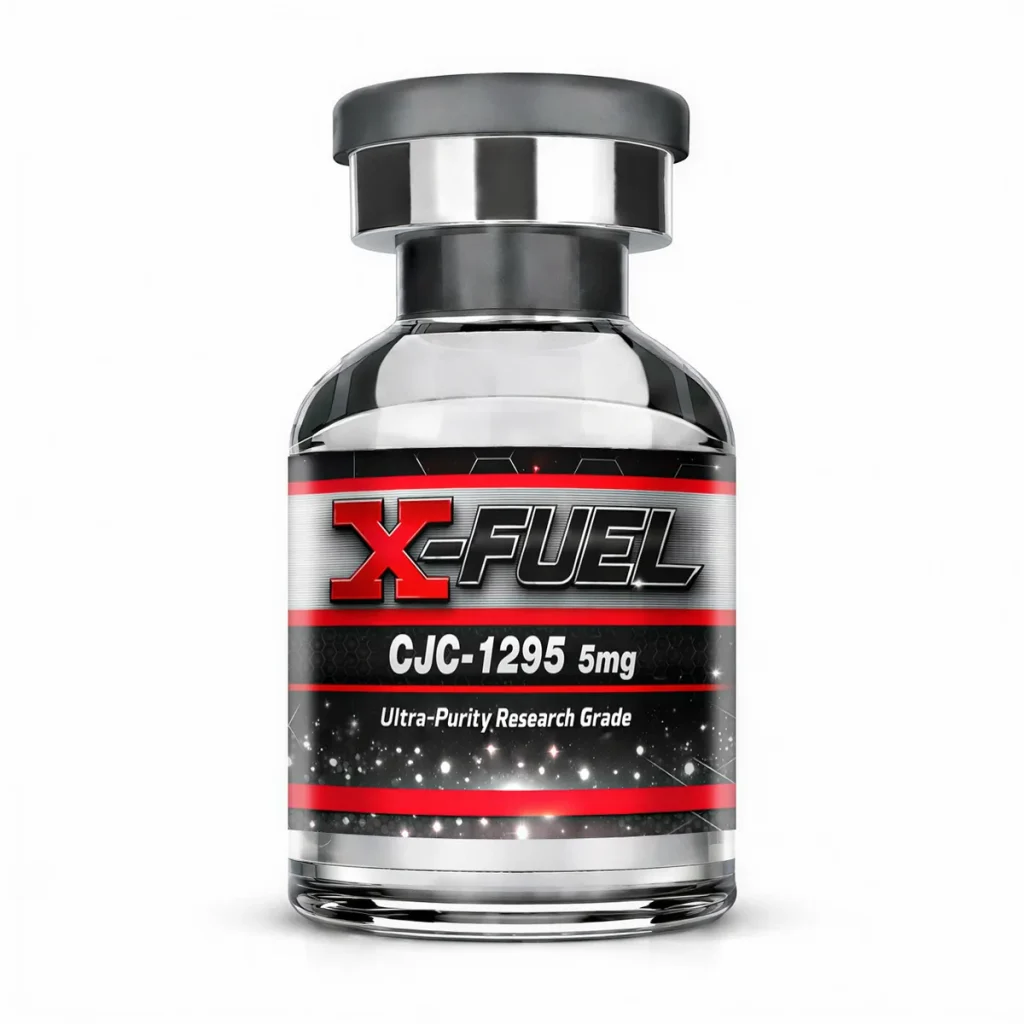
CJC-1295 is a GHRH analogue engineered for an exceptionally long half-life — days, not minutes. It uses a Drug Affinity Complex (DAC) to bind irreversibly to albumin in the bloodstream, creating sustained GH-releasing hormone receptor stimulation and continuous pulsatile GH secretion. If tesamorelin is the standard GHRH research tool, CJC-1295 DAC is the long-duration variant for studies requiring sustained GH axis activation over extended timeframes. True North Peptides supplies CJC-1295 at ≥99% purity in 5mg lyophilised vials. For research use only.
What Is CJC-1295?
CJC-1295 is a synthetic analogue of growth hormone-releasing hormone (GHRH) incorporating a Drug Affinity Complex (DAC) — a maleimide linker at the C-terminus that allows it to bind covalently and irreversibly to cysteine-34 on albumin. Once albumin-bound, CJC-1295 circulates with albumin's half-life rather than its own, extending its GH-stimulating activity from minutes (native GHRH) to approximately 6–8 days. This makes it one of the longest-acting GHRH analogues available for research.
The DAC Mechanism — Why It Changes Everything
Most peptides are degraded within minutes to hours. CJC-1295's DAC technology solves this by hitching the peptide to albumin — the most abundant protein in plasma. The result is a sustained GHRH signal at the pituitary over days, producing continuous stimulation of the GHRH receptor (GHRHR) and ongoing pulsatile GH secretion. For research requiring sustained GH axis activation — without repeated dosing — CJC-1295 DAC provides a fundamentally different research tool than shorter-acting GHRH analogues like tesamorelin.
GH Axis Research — Sustained vs Pulsatile
Native GH secretion is pulsatile — the pituitary releases GH in bursts, primarily during sleep. CJC-1295 DAC maintains continuous GHRHR stimulation, which produces ongoing GH pulsatility from the pituitary rather than a flat, sustained GH elevation. This is important: research distinguishes between pulsatile GH (which has different downstream effects on IGF-1 and body composition than continuous GH elevation). CJC-1295 DAC sustains the stimulus, not the GH itself — the pituitary still controls the pulse pattern.
CJC-1295 vs Tesamorelin
Both are GHRH receptor agonists. Tesamorelin has a half-life of hours and is studied for more controlled, shorter-duration GH axis activation. CJC-1295 DAC has a half-life of days due to albumin binding — making it the choice for research examining sustained GH axis stimulation over extended periods. They're different tools for different research questions: tesamorelin for precision, CJC-1295 for duration.
Stacking With Ipamorelin
CJC-1295 (GHRHR agonist) and ipamorelin (GHSR-1a agonist) are among the most commonly combined GH secretagogue research tools because they stimulate GH release through completely different receptor pathways. CJC-1295 acts on the GHRH receptor; ipamorelin acts on the ghrelin receptor. Co-administration in animal models has shown synergistic GH release significantly greater than either compound alone — making this one of the most studied combination protocols in GH axis research.
Storage & Handling
Store lyophilised CJC-1295 at −20°C. Reconstitute with bacteriostatic water, gentle swirling. Refrigerate at 2–8°C post-reconstitution, use within 4–6 weeks. Avoid freeze-thaw cycles.
Product Specifications
Compound: CJC-1295 with DAC (GHRH analogue, albumin-binding) | Form: Lyophilised powder | Vial Size: 5mg | Purity: ≥99% | Storage: −20°C dry; 2–8°C post-reconstitution.
Store lyophilised product at -20°C or below. After reconstitution, store at 4°C and use within 30 days. Keep away from direct sunlight and moisture.
This product is intended for laboratory and research use only. Not for human or veterinary use. Must be handled by qualified researchers in an appropriate facility.